
Ecommerce Returns Resource Center
Save every penny across the returns lifecycle.
Learn how to prevent avoidable returns, reduce the cost of returns that still happen, protect the customer experience, and recover more value from every item that comes back.
Start with these essential resources
The End of Traditional Ecommerce Returns
See why warehouse-centric returns became so expensive, where the model broke, and what a more durable returns strategy requires.
Read the Returns Bible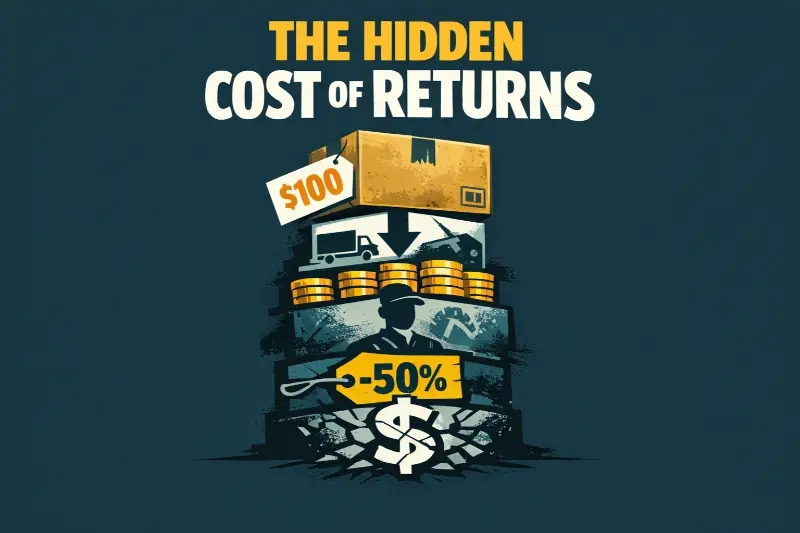
The Hidden Economics of a $100 Return
Follow the cost stack across refunds, shipping, labor, delays, markdowns, inventory exposure, and lost margin on every return.
See the cost breakdown
What Are Peer-to-Peer Returns?
Learn how eligible, verified returned items can be matched to new customer demand and routed directly to the next buyer.
Explore the modelWhat problem are you trying to solve?
Choose the part of your returns program that needs attention. We’ll take you to the strongest starting resources and the complete topic library.
Understand why returns cost so much
For leaders quantifying margin leakage, setting returns KPIs, or building an executive strategy.
Reduce avoidable returns
For brands addressing high return rates, inaccurate product expectations, fit problems, or recurring return reasons.
Improve the returns program
For teams working on policies, CX, fraud, reverse logistics, 3PL operations, or returns technology.
Recover more value from returned inventory
For brands reducing warehouse handling, accelerating resale, avoiding markdowns, and recovering inventory value sooner.
Understand returns economics and market change
Ecommerce Returns Analytics: Why Your Return Rate Hides the Real Problem
Break down returns by customer cohort, SKU, reason, seasonality, and recovery value to find what needs fixing.
Explore the analytics guideA Pragmatic Returns Strategy Roadmap for Ecommerce Executives
Use a five-step framework to move from scattered fixes to measurable gains in return economics.
Explore the roadmapHow CFOs Should Evaluate Returns Strategy
Evaluate returns through gross margin, working capital, acquisition efficiency, and recovery timing.
Read the CFO frameworkThe History of Ecommerce Returns and Where the Model Broke
Trace how returns evolved from a tolerable cost into a structural liability for modern ecommerce.
Read the historyThe KPIs That Actually Matter for Modern Returns Management
Measure outcomes such as recovery, speed, routing quality, and value retained—not activity alone.
Review the KPIsExplore 12 more economics and strategy resources
- COGS in Ecommerce: What It Means, What Counts, and What Most Brands Get Wrong
- Ecommerce Returns Best Practices: How to Streamline Processes and Boost Customer Satisfaction
- Future of Ecommerce Returns: Why the System Needs a Structural Rewrite
- How to Talk to Your Board About Returns | Board-Level Returns Strategy
- Inventory Turnover Ratio: What It Is, How to Calculate It, and How Ecommerce Brands Improve It
- Returns as a Margin Lever, Not a Cost Center
- Returns Management: Why It Looks Manageable Until It Isn’t
- Smarter Ecommerce Returns Solutions: How to Turn Refunds into Revenue
- Top 7 Returns Optimization Marketing Strategies For Making Free Shipping Profitable
- Top Ecommerce Returns Best Practices: Strategies for Efficiency & Customer Satisfaction
- Why Drop-Off Networks Improve UX But Don’t Fix Returns Economics
- Why Returns Became a Silent Margin Killer
Prevent avoidable returns
Return Reason Codes: How to Find the Real Cause
Validate customer-selected reasons against item condition and order data before deciding what to fix.
Diagnose return reasonsReduce Returns With Better Product Descriptions
Use clearer product details, imagery, sizing, and expectations to prevent mismatched purchases.
Read the guideTop Ecommerce Return Reasons and How to Address Them
Identify recurring return reasons and connect each to practical actions that reduce avoidable returns.
Review the return reasonsUnderstanding the Average Ecommerce Return Rate
Compare return-rate patterns across categories and learn how to interpret your own rate in context.
Read the benchmark guideWhy Are Ecommerce Returns So High?
Understand the product, expectation, policy, and customer-behavior factors that push return rates up.
Explore the causesExplore 10 more return-prevention resources
- Apparel Returns in the GLP-1 Era: How Brands Can Adapt
- Ecommerce Keyword Optimization: When SEO Creates Product Returns
- How Ecommerce Return Rate Affects Profit Margins (and How to Fix It)
- How to Address the Rise of E-commerce Return Rates
- How to Reduce Returns in Ecommerce and Boost Profits
- How to Reduce Returns in Ecommerce Using Customer Feedback
- How To Reduce Returns In Ecommerce: Proven Strategies for the Fashion Category
- Impact of Returns on Profitability: How Ecommerce Returns Impact Customer Lifetime Value (CLV)
- Returns Are No Longer a CX Feature – They’re a Balance Sheet Liability
- Why Scale and Consolidation Failed to Reduce Returns
Build better return policies and customer experiences
Crafting a Return Policy in Ecommerce
Build a policy customers can understand while protecting margin, encouraging better outcomes, and reducing customer confusion.
Build a better policyReduce Returns in Fashion Ecommerce
Use sizing tools, product information, policy design, and customer-experience improvements to address fashion returns at the source.
Read the fashion guideExplore 10 more policy and customer-experience resources
- Best Practices for an Effective Ecommerce Return Policy (2025)
- Crafting the Perfect Ecommerce Returns Program
- Encourage Customer Loyalty with an Exceptional Returns Program
- Free Returns Coming to An End?
- Lessons from Top Ecommerce Brands to Improve Ecommerce Return Experience
- Return Policy Strategies to Build Customer Loyalty and Reduce Returns
- Top 10 Ecommerce Returns Mistakes (and How to Fix Them)
- Why Faster Refunds Made Returns More Expensive
- Why Retailers Are Tightening Their Return Policy
- Return Fees vs. Free Returns: What Ecommerce Brands Should Actually Optimize
Prevent return fraud and abuse
Detecting and Preventing Ecommerce Returns Fraud
Recognize common fraud patterns and strengthen verification, policy, and operational controls.
Read the fraud guideWhat Is Wardrobing and How Can Brands Minimize It?
Understand this form of serial returns abuse and the controls that reduce it without punishing real buyers.
Learn about wardrobingExplore 10 more fraud and abuse resources
- AI Fraud Detection for Ecommerce Returns: Protect Your Business Today
- Creating Individualized Ecommerce Return Policies by User Segment: A Smarter Way to Keep Customers Happy and Boost Profits
- Ecommerce Return Fraud vs. Refund Fraud: Actionable Strategies for Prevention
- Reducing Ecommerce Returns Fraud from Wardrobing Returns
- Return Fraud: Why Detection Alone Won’t Stop Abuse
- Returns Management: Why Returns Are the Next Battleground in Retail
- Sustainability vs Economics: What Really Forced Returns Management Reform
- The Silent Profit Killer: Returns Fraud and Refund Fraud Exposed
- Why Returns Are Becoming a Board-Level Topic
- Why Reverse Logistics Innovation Plateaued
Improve reverse logistics and returns operations
3PL Returns: How Outsourced Returns Actually Work
Understand the SLAs, disposition rules, controls, and hidden costs that determine whether outsourced returns perform well.
Explore 3PL returnsHow to Optimize Reverse Logistics
Improve return routing, processing, disposition, visibility, and coordination to reduce waste and cost.
Read the operations guideWhat Is a Return Label?
Learn how return labels are created, distributed, tracked, billed, and used within an ecommerce returns workflow, end to end.
Read the label guideWhat Is Reverse Logistics?
See how returned goods move back through the supply chain, why the flow is expensive, and where the biggest inefficiencies emerge.
Learn the fundamentalsWhy Returns Management Is Becoming a Strategic Capability
See why recovery speed, inventory value, and margin protection are elevating returns beyond routine refund processing and into strategy.
Read the analysisExplore 9 more reverse-logistics resources
- Free Returns Aren’t Sacred — And Haven’t Been for Years
- Managing Cross-Border Ecommerce Returns: Strategies & Solutions
- Returns Outsourcing: Why It Didn’t Fix Returns Economics
- The Myth of “Efficient” Reverse Logistics
- Top 7 Ecommerce Return Strategies and Overcoming Reverse Logistics Challenges
- What does RMA mean: Returns Merchandise Authorization (RMA) and Product Returns
- What is a Restocking Fee, And Alternative Options
- What Is Post-Purchase Experience in Ecommerce?
- Why Holiday Returns Are Hitting Earlier Than Expected – and What That Means for Ecommerce Operations
Evaluate returns technology and platforms
Evaluating Ecommerce Return Platforms
Compare the features that matter across portals, policy logic, labels, exchanges, analytics, integrations, and day-to-day operations.
Evaluate platform featuresLoop Returns vs. Narvar vs. AfterShip
Compare three widely used returns platforms and the merchant needs each one is designed to address.
Read the comparisonWhy Returns Management Software Doesn’t Actually Fix Returns
Understand why better workflows and customer experience do not automatically reduce shipping, handling, or inventory-value loss.
Read the analysisExplore 18 more returns-technology resources
- AfterShip Returns Management Solution: Pros and Cons
- Best Returns Management Software for 2025
- Customer Returns Management: How to Use Your Returns Process to Enhance Customer Loyalty
- Effective Ecommerce Returns Management: Strategies to Minimize Losses
- Happy Returns: Advantages and Disadvantages
- Loop Returns: Advantages and Disadvantages
- Narvar Returns Management Solution: Advantages and Disadvantages
- Return Automation Process Technologies: Streamline Ecommerce Returns
- Return Prime Returns Solution: Pros and Cons
- ReturnBear Reverse Logistics: Advantages and Disadvantages
- ReturnGo Returns Management Solution: Pros and Cons
- Returns Automation: AI and Improving Efficiency & Profits in Ecommerce
- Rich Returns & Exchanges: Pros and Cons
- The Best Return Platforms for Streamlined E-Commerce Management
- Top Benefits of Using Returns Management Software for Your Business
- Why Automated Chatbots Don’t Cut It for Product Returns Management (and What to Do Instead)
- Why Returns Automation Didn’t Lower Return Costs
- ZigZag Returns Management Solution: Pros and Cons
Manage Amazon and marketplace returns
Amazon’s Frequently Returned Item Label
Learn what the label signals to shoppers and how elevated return rates can affect seller reputation and overall sales performance.
Read the seller guideAnalyze Your Amazon FBA Returns
Use FBA return data to uncover product issues, reduce refunds, and improve performance.
Analyze FBA returnsExplore 4 more Amazon returns resources
Sustainability, resale, and circularity
Reduce the Carbon Footprint of Returns Without Greenwashing
Focus on practical reductions in unnecessary transport, handling, packaging, and waste instead of vague environmental claims.
Read the sustainability guideUnderstanding the Cost of Free Returns
Examine the financial, operational, and environmental tradeoffs behind a customer-friendly returns promise.
Explore the tradeoffsExplore 7 more sustainability and resale resources
- How Flipping Leftovers Became Retail’s Goldmine
- How to Support Eco-Friendly Returns
- Sustainable Returns: Eco-Friendly Strategies for Ecommerce Stores
- The Evolution of Thrifting: Why Secondhand Shopping Has Gone Mainstream
- Understanding EPR: Best Practices for Sustainable Product Stewardship
- Understanding the EU Green Deal: Impact on Sustainability and Business
- Why Free Returns Were Always a Loss Leader, Not a Business Model
Recover more value with Peer-to-Peer Returns
How Peer-to-Peer Returns Work
Follow the flow from return request and eligibility review through verification, matching, direct forwarding, and settlement.
See how it worksIntroduce Peer-to-Peer Returns Without Breaking Customer Experience
Use a verification-first, selective rollout that preserves clarity, trust, and familiar customer-facing workflows.
Read the implementation guidePeer-to-Peer Returns Economics
See which shipping, handling, delay, and markdown cost layers can be avoided when an eligible item is successfully matched to a new buyer.
Explore the economicsWhere Peer-to-Peer Returns Do Not Fit
Learn which products, conditions, demand patterns, and operating situations still require a standard warehouse return path.
Understand the limitationsPeer-to-Peer vs. Warehouse Returns
Compare a warehouse-first return flow with selective forward routing for eligible returned inventory.
Read the comparisonThe Power of Peer-to-Peer Returns
Hear Cahoot and ProShip experts discuss the limitations of traditional returns and the operating case for a different model.
Watch or read the discussionWhen Warehouse Returns Still Make Sense
See when traditional processing remains the right path and where a selective Peer-to-Peer option can complement it for eligible items.
Choose the right pathExplore 13 more Peer-to-Peer Returns resources
- Common Objections to Peer-to-Peer Returns (And the Mistake Behind Each)
- Ecommerce Returns Were Never Designed for Scale — Here’s Why
- Peer-to-Peer Returns: Why P2P Requires a Different Mental Model
- The Best Peer-to-Peer Returns Platform: Maximize Your Investment Today
- The Future of Returns in Ecommerce: Trends to Watch
- The Warehouse-Centric Return Loop (And Why It Can’t Be Fixed)
- Why 100% P2P Adoption Is the Wrong Goal for Peer-to-Peer Returns
- Why Choose a Peer-to-Peer Returns Management Model over Traditional Methods?
- Why Peer-to-Peer Returns Are Inevitable in Ecommerce
- Why Peer-to-Peer Returns Are Not Recommerce
- Why Peer-to-Peer Returns is the Next Big Thing in Retail Sustainability
- Why Peer-to-Peer Returns Reduce Fraud by Design
- Why Peer-to-Peer Returns Scale When Warehouses Don’t
Your returns system may process returns. Is it recovering their value?
Returns software can improve authorization, labels, tracking, exchanges, and workflows. Cahoot adds an optimization and recovery layer for the inventory itself.
Cahoot Peer-to-Peer Returns matches eligible, verified returned items to new customer demand so they can ship directly to the next buyer instead of first returning to the warehouse. Only eligible items take the Peer-to-Peer path. All other returns follow your standard workflow.
For eligible returns, the goal is simple: avoid unnecessary reverse shipping and handling, return inventory to circulation sooner, and recover more value before time and markdowns consume it.
Frequently asked questions
Where should I start if I am reviewing my returns program?
Start by understanding the complete cost of your current returns flow, then identify whether your biggest opportunity is prevention, policy and customer experience, fraud control, operations, technology, or value recovery. The Returns Bible provides the strategic overview, while The Hidden Economics of a $100 Return provides the financial starting point.
How can ecommerce brands reduce their total cost per return?
Brands can prevent avoidable returns through better product information and feedback loops, reduce necessary-return costs through stronger routing and operations, and recover more value by returning viable inventory to sale sooner. The right mix depends on the product, return reason, item condition, demand, policy, and existing fulfillment setup.
What is the difference between returns management and returns optimization?
Returns management focuses on initiating, authorizing, tracking, communicating, and processing returns. Returns optimization looks across the full economic outcome, including prevention, shipping, handling, verification, disposition, recovery speed, resale value, and whether an eligible item needs to return to a warehouse at all.
What are Peer-to-Peer Returns?
Cahoot Peer-to-Peer Returns matches eligible, verified returned items to new customer demand so they can ship directly to the next buyer instead of first returning to the warehouse. It adds a recovery path within a broader returns strategy.
Does every Peer-to-Peer return bypass the warehouse?
No. Only eligible items take the Peer-to-Peer path. Items that are unsuitable, unverified, unmatched, damaged, restricted, or otherwise ineligible follow the brand’s standard return workflow.
How are returned items verified before being sent to another customer?
Cahoot uses a Triple Verified process that combines AI fraud screening, human verification, and buyer confirmation. Eligibility and routing also depend on item condition, return reason, product type, demand, and the brand’s rules.
Can Peer-to-Peer Returns work with an existing returns platform or 3PL?
Yes. Peer-to-Peer Returns is designed as an optimization and recovery layer rather than an all-or-nothing replacement. Existing platforms and 3PLs can keep handling standard returns while eligible, verified items use the Peer-to-Peer path.
Are Peer-to-Peer Returns appropriate for every product?
No. Product type, condition, resale demand, economics, customer experience, regulatory requirements, and verification needs all affect fit. Some returns should still go to a warehouse, and selective adoption is a more credible goal than routing every return Peer-to-Peer.